Computer Woes and Catch Up

Our computer woes intermittently continue. Between Photoshop not fully working and several additional issues the blog is behind. Today is Tuesday, August 9 and our last day in Nova Scotia. Tonight, shortly before midnight we will board the ferry to Newfoundland remaining there for the next month. Today’s blog will attempt to capture some of what we’ve been up to over the past week.

Starting with a week ago we left the private campground along the coast and moved inland to Whycocomagh Provincial Park overlooking Bras d’Or Lake. We spent a few days exploring Cape Breton Highlands National Park, the Cabot Trail, and the Baddeck area. Additional outings included a supply run to Sydney, the largest community on Cape Breton Island, and a puffin boat tour.

There are two boat tours to Bird Islands where one can observe several sea birds including the Atlantic puffin, the most colorful and majestic of the puffin family. One tour company has been doing boat tours to Bird Islands for 50 years and they are on their third generation of captains. We’ve done this boat tour a few times with the first back in 1982. The second boat tour, the newcomer, is in it’s 27th year. We did this one this time. The tour starts in Bras d’Or Lake near the inlet to the Atlantic. Bird Islands are found about 5 miles out from the inlet. A few observations of how things have changed since our 1982 tour. There are fewer Puffins, but not a hugely smaller number. In 1982 there were no eagles, five years ago there were some eagles, and now we saw well over 20 eagles on the Islands.           

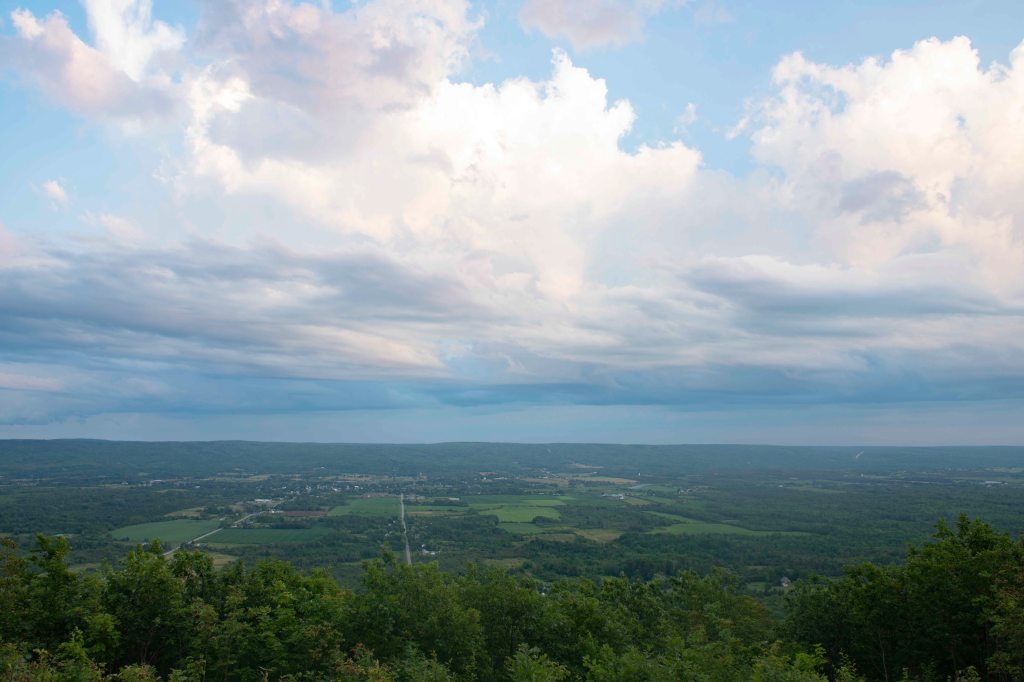
Whycocomagh Provincial Park is on a mountainside overlooking Bras d’Or Lake and above the Trans Canada Highway as it heads to the ferry terminal onward to Newfoundland. The sites are spread out and fairly private. We’re towards the top of the park with a view to the lake far below. A heat wave has fallen upon the area with temperatures in the high 80’s. Some of you may be chuckling that the high eighties are a heat wave, yet those temperatures on Cape Breton are rare. Late in the day our site is exposed to the sun with no shade at all except on the other side of our camper. So we park our chairs next to the access road in the camper’s shade and play cribbage. Next thing we hear is somebody saying it is Wells! We look up and walking along the access road are Julie and David Will, who Wells knows from an art gallery in Hamilton where he sold his photographs and they sold their beautiful woodworking. Marsha knows Julie from the Rogers Center. If we had not been on the roadside they never would have spotted us. After a chat we invite them to join us after supper tomorrow evening which they do.

The next morning we are preparing to move to another park and Julie and David show up on their ebikes. Julie was in the park bathroom and found a Rogers Environmental Education Center ball cap and guessed that it had to be Marsha’s. Of course, it was. If Julie had not found it and put two and two together the cap would be long gone. Thanks Julie!

Battery Provincial Park in St. Peters is our next and final campground before we are off to Newfoundland. This is where in the 1800’s a canal was built to connect Bras d’Or Lake with the Atlantic as a safer and shorter route from the south to the north. Again, the Provincial Park is high above the water with views to both the Ocean and Canal.

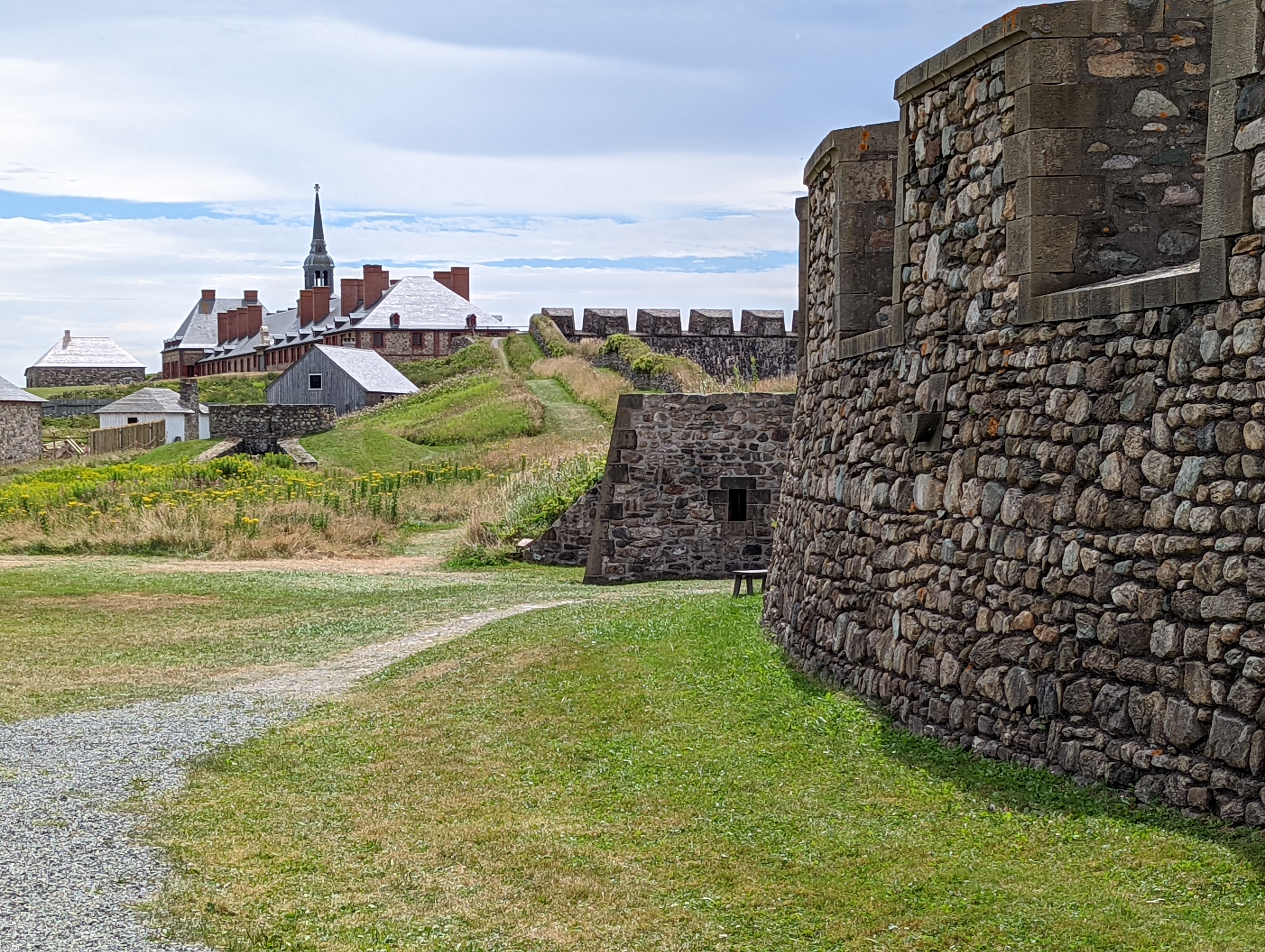
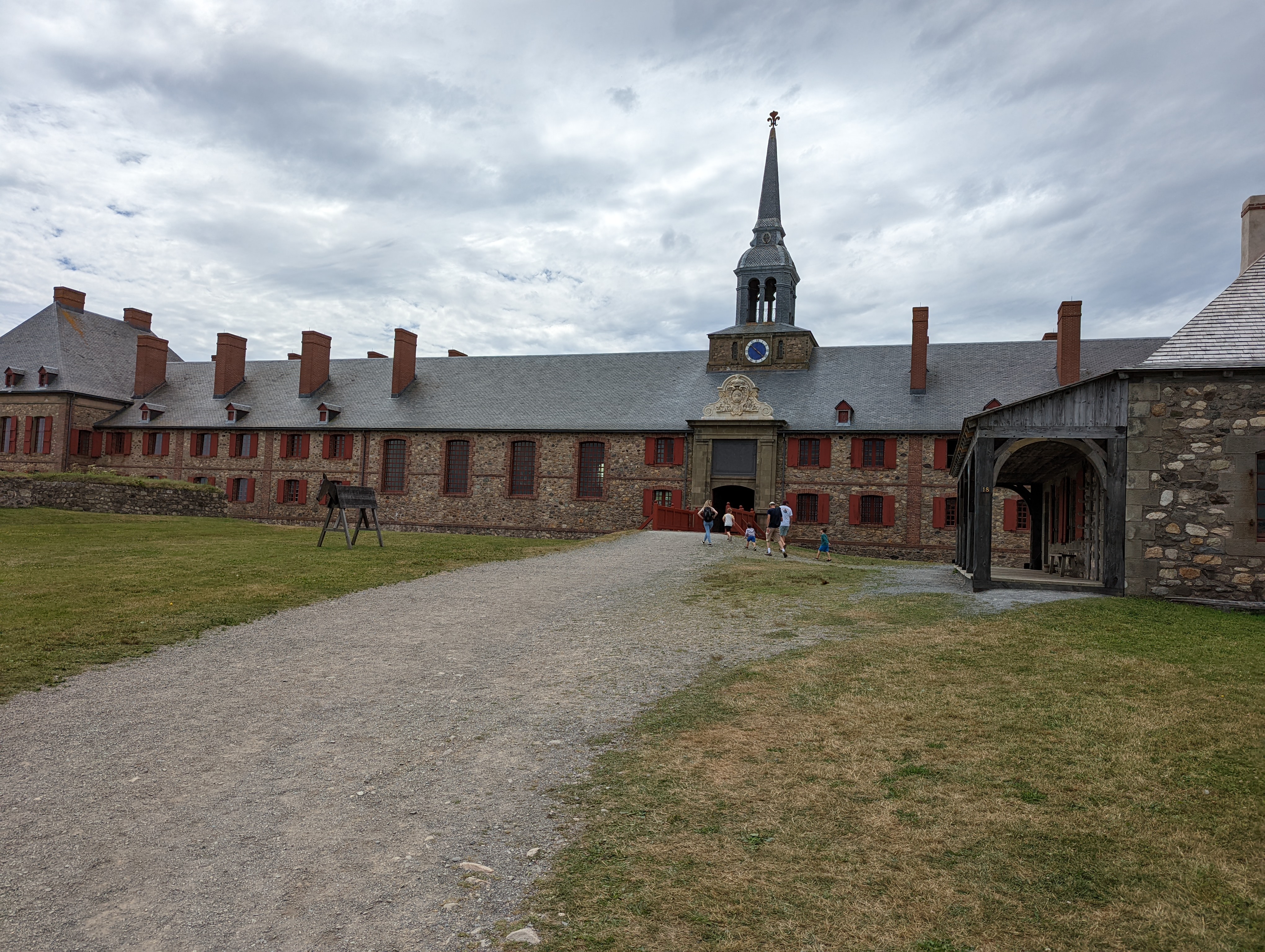
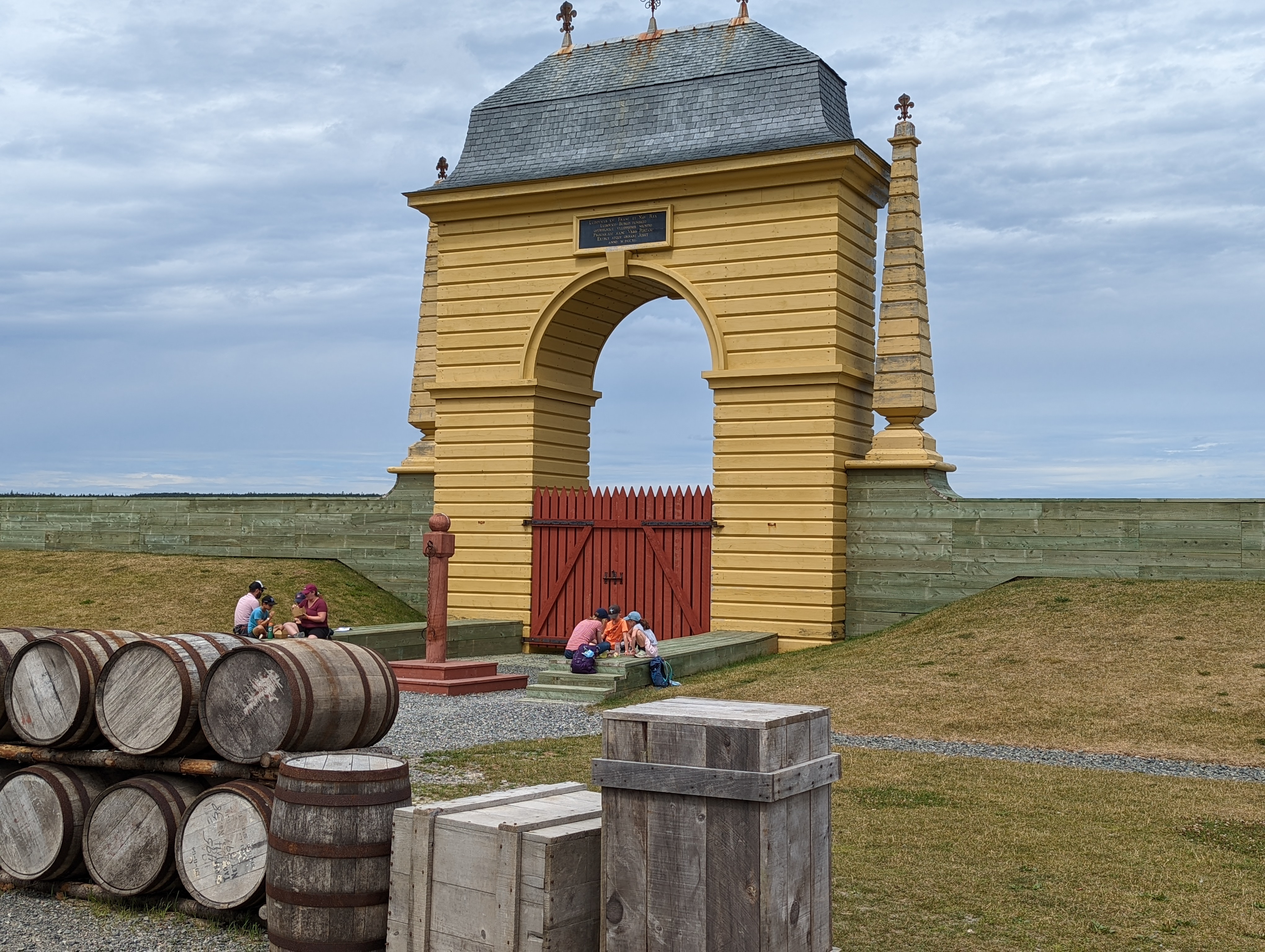
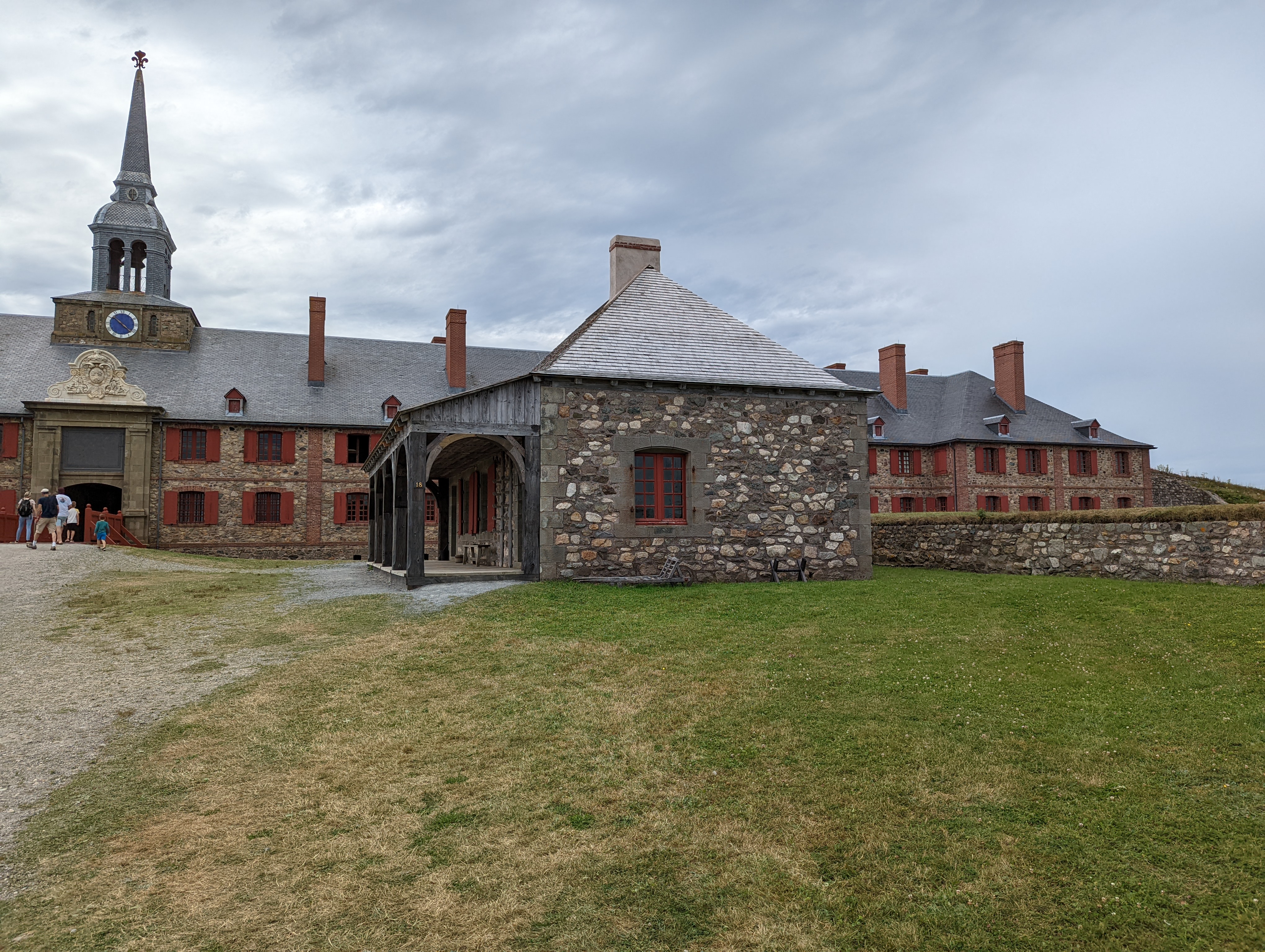
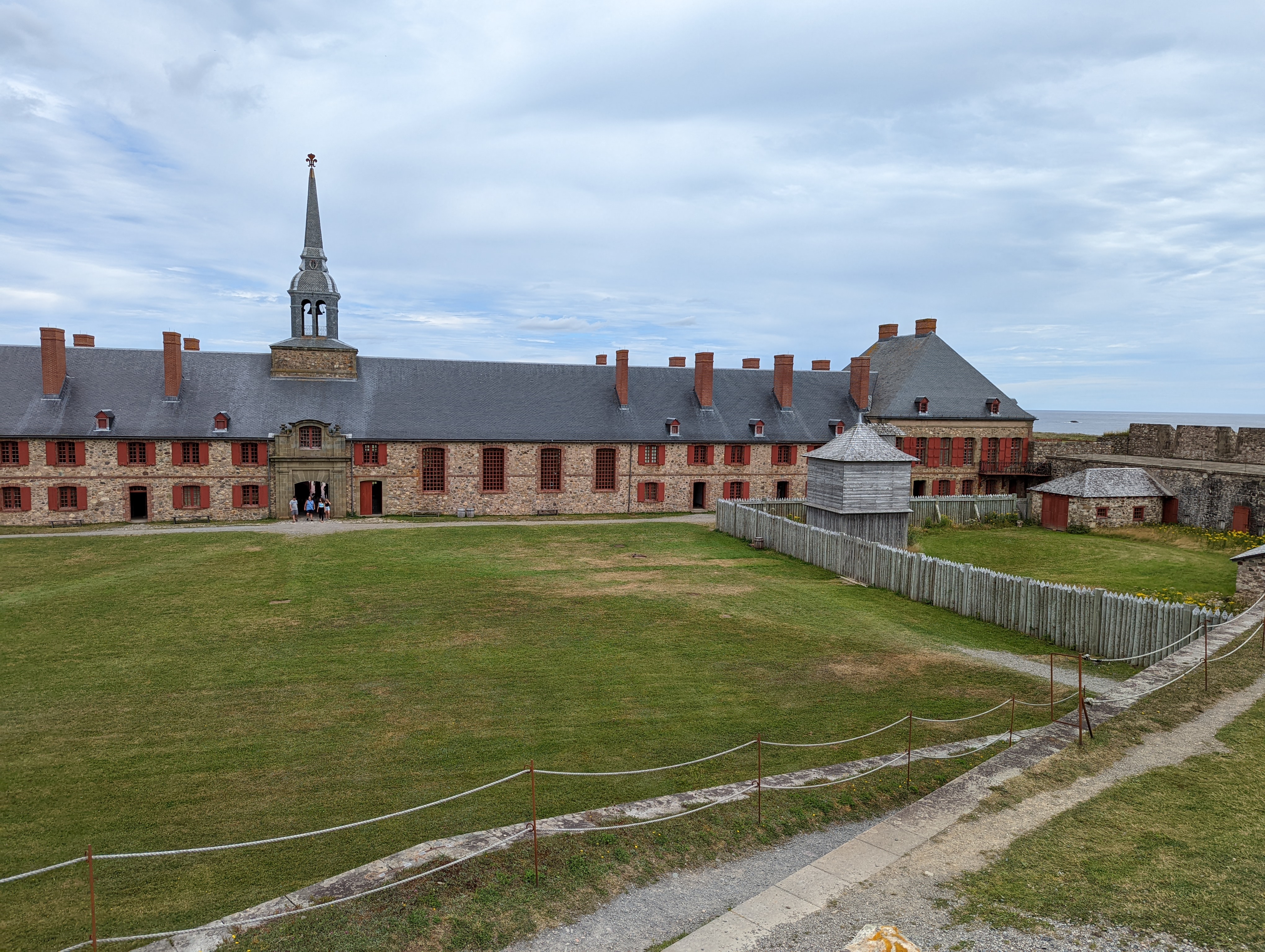
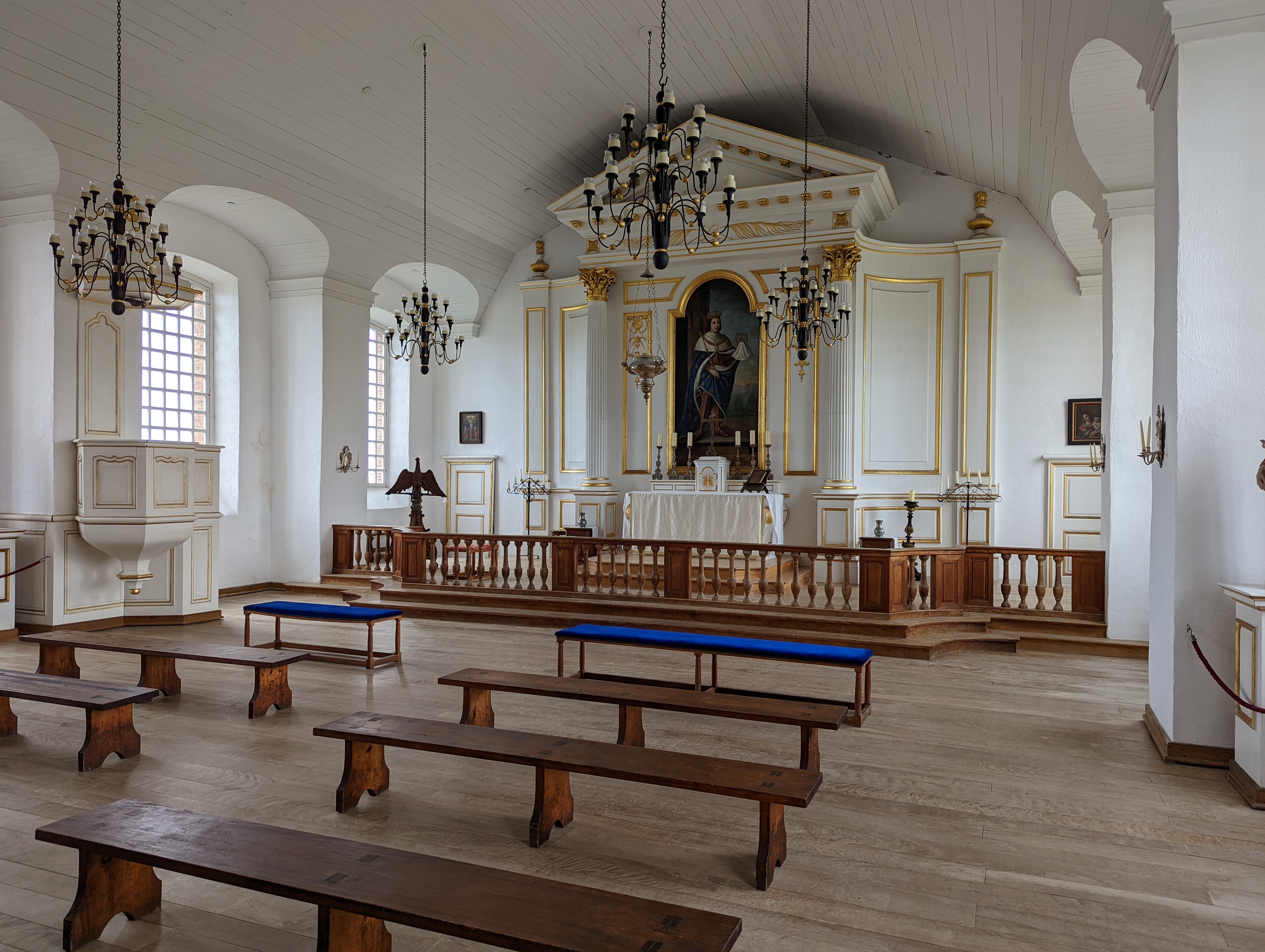
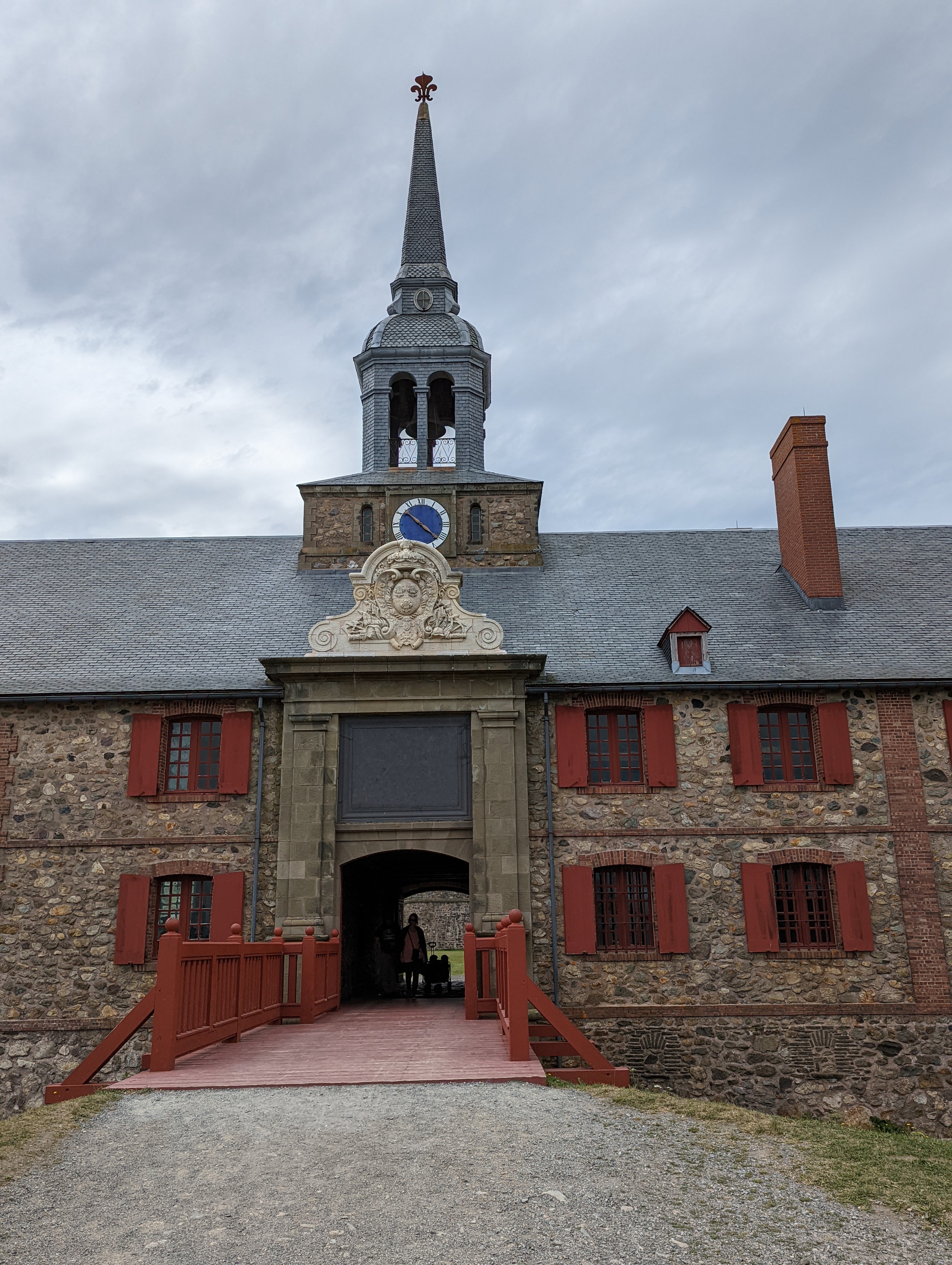
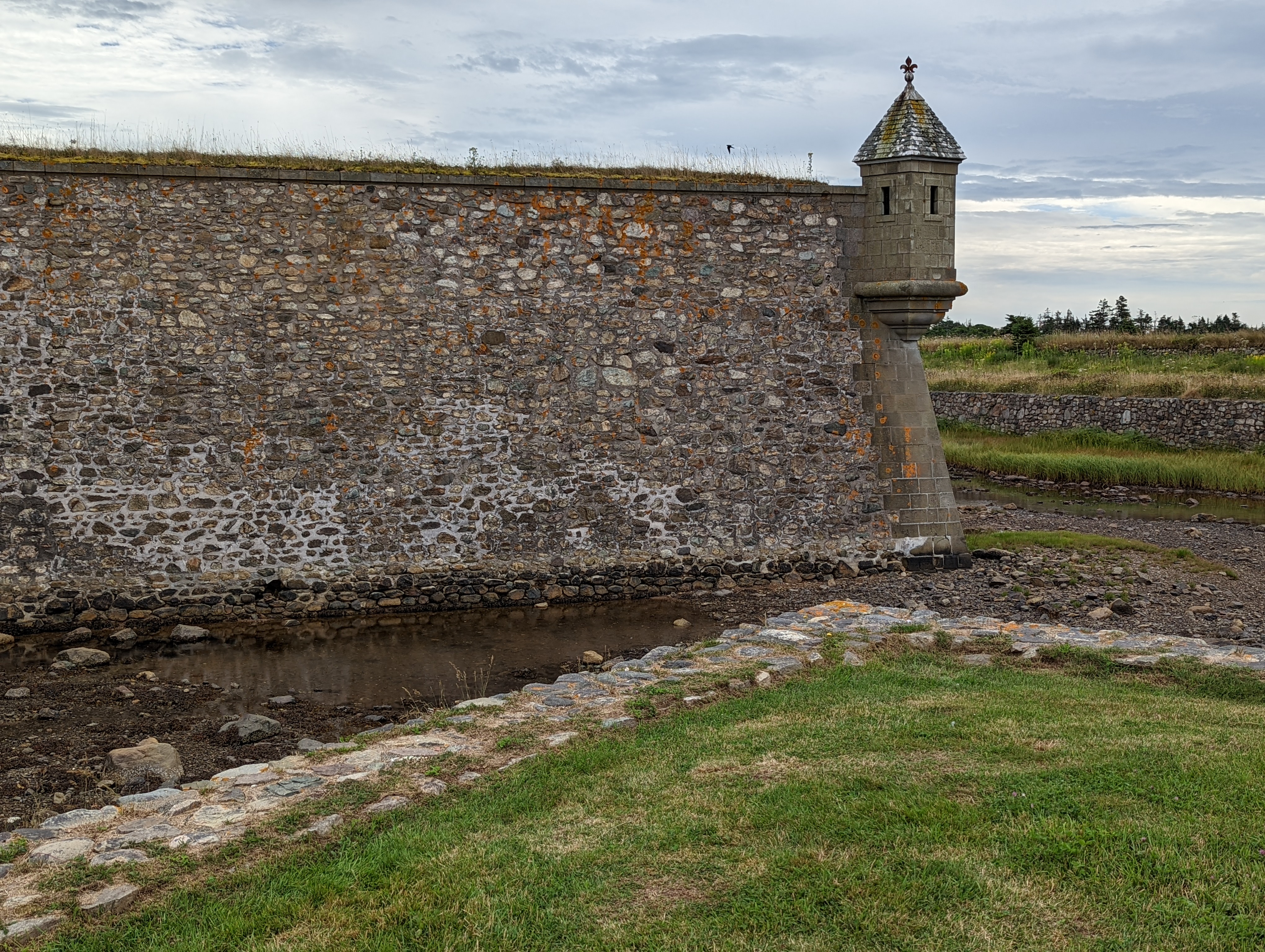
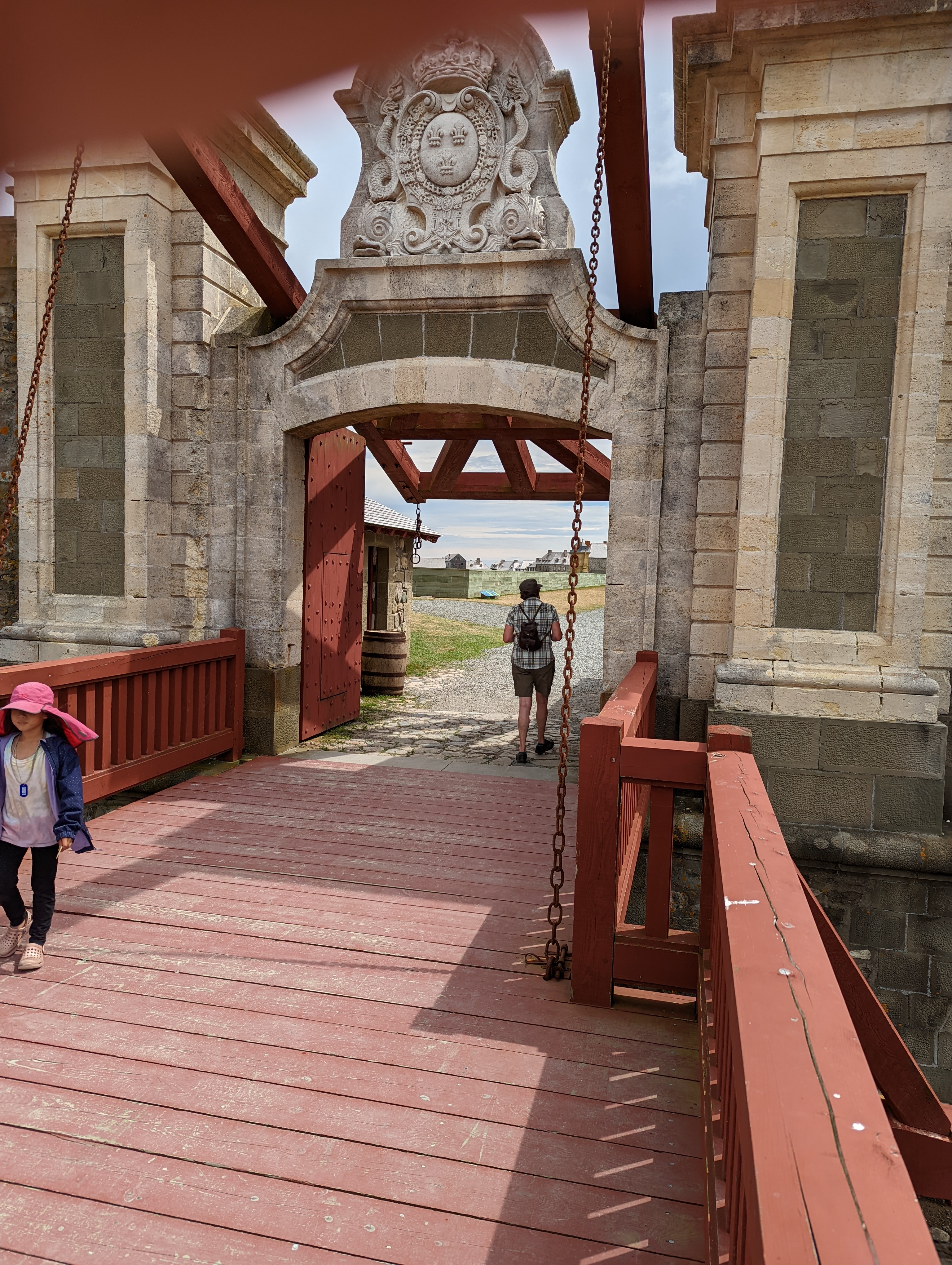
On Monday, we head to Louisbourg to explore the Fortress of Louisbourg National Historic Site. This is a restored massive fort built in the 1700’s to protect France holdings in North America. It is complete with historical actors yet this is on an entirely larger scale than most historical villages. We have several photos that we’ll attempt to upload here.
First Full Day on Cape Breton

Is it our first full day on Cape Breton, or our first full day in Cape Breton? Oh well, who cares. We are camped at a private campground in Dunvegan along the shore of the Gulf of St. Lawrence. The campground is huge, full, and open without trees, yet there is plenty of space between campsites. The views from here and along the gravel road to get here is outstanding. Again, we find our Internet band width almost nothing so photos will be uploaded later when we have connectivity.

In the morning we head towards Cheticamp and to Cape Breton Highlands National Park. Here the road follows the coastline with dramatic vistas over the Gulf then it turns inland crossing the mountains towards the Atlantic Ocean side. The road climbs to about 1,000 feet about sea level as the road cuts along mountain sides.

Since Wells is still not walking difficult terrain yet due to his foot issue we pick a trail we first walked in 1982, the Bog Trail. This is a 1 km boardwalk in and about a bog. We have hopes of seeing pitcher plants and sundews both of which feed on insects. We are in luck with pitcher plants, but no luck this year with sundews. Next we decide to hike a short section of the old Cabot Trail which connected the coastal Acadian settlers to each other. The trail is short yet steep. This is the most difficult walk for Wells over the past two years as he is both breathing hard with a huge smile.

On our way back to the campground we stock up on supplies in Cheticamp and return to our campsite. Tonight, we are invited out to Donna and Bob’s home about a ten minute drive from the campground. Donna is a friend Wells first met in the 1970’s when she ran a contra dance in Concord, MA at the Scout House. Here is where Wells first learned to contra dance. If you don’t know about contra dancing check it out on Youtube. The band was Yankee Ingenuity, with Tony Parkes as caller. Donna also runs the Great Groove Band at the Old Songs Festival. Each year Donna and others put together a band of kids ranging in age of maybe 7 years old to 17 years old.

We arrive at Donna and Bob’s and catch up on various things of the past then Robert arrives. He’s from and grew up in Cheticamp and also is a fiddler. After a lobster dinner we enjoy conversation and music until it’s time to head back to camp.

Cape Breton Island

In thinking of Cape Breton some think of The Cabot Trail and the dramatic mountainous coastline where the Cabot Trail highway does a huge circle. Back in 1982 Marsha and Wells spent a week bicycling around the trail. It took us a full week to complete the circle with fully loaded touring bikes. It’s possible to drive the entire loop in a day, but you miss so many interesting things.

Cape Breton can be thought of as an island divided. The northwestern component that borders on the Gulf of St. Lawrence and the southeastern component that borders on the Atlantic Ocean. Separating these two land masses is Bras d’Or Lake. This inland sea is a saltwater lake more the 600 square miles in area, more than 900’ deep, sixty miles long and up to almost 40 miles wide. Add to all that this convoluted shoreline is hundreds of miles. This huge inland sea splits Cape Breton into regions. The northwestern part includes Cape Breton Highlands National Park and the Cabot Trail and the northern part is mountainous.

We have ten days to explore Cape Breton before we catch the ferry to Newfoundland. After crossing the causeway to the Island we start by following the coast in a clockwise direction. We arrive on the Island on a Sunday on Monday evening we’ll visit with our friends, Donna and Bob.

Canso Islands and Grassy Island – July 29

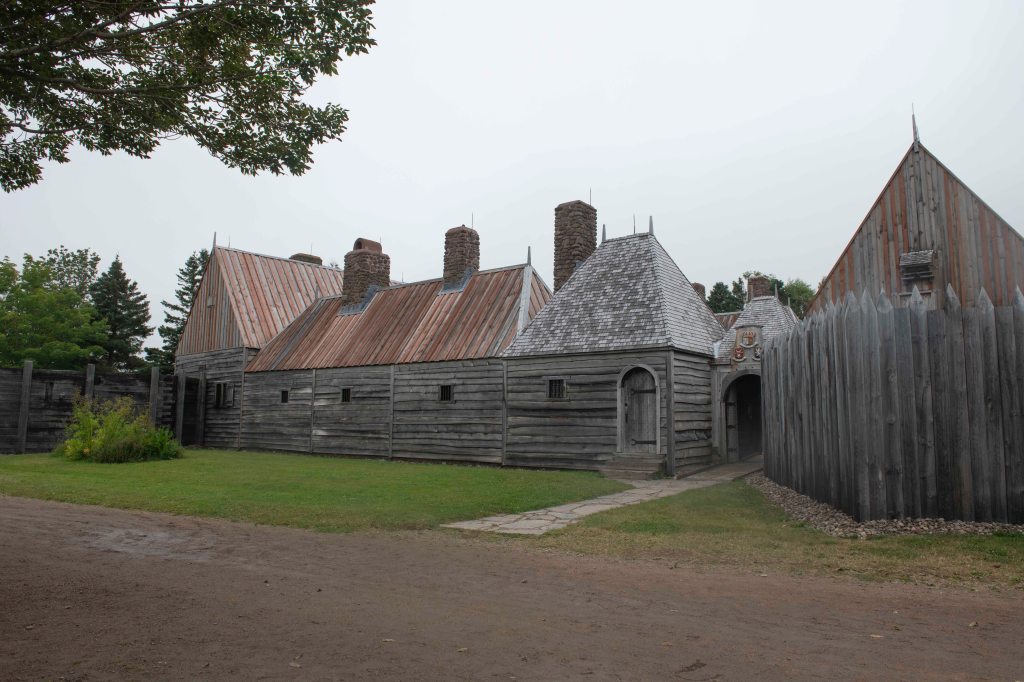
Our computer is acting up, but now seems to be working once again. Marsha read about the Caso Islands and Grassy Island close to Canso. We head to the end of the road in Canso looking for the Parks Canada Interpretive Center about Grassy Island. From there we plan on taking the boat trip to Grassy Island to see first hand is abandon island that once was a key location for both the French and British. Nothing remains on the island other than remnants of an old fort from the 1700’s. We arrive at the Interpretive Center discovering the boat is not running. It’s been out of commission for three weeks now with engine issues. Oh well, no trip to Grassy Island which was an early settlement for fishermen. It was fought over and invaded by both the French and British as they fought for control of the area. At one point a treaty was signed giving the British control of mainland Nova Scotia while the French obtained control of the islands in the Gulf of St. Lawrence which included Prince Edward Island and Cape Breton. The status of the islands near Canso was never clearly determined in the treaty. Thus, the battle for control over them.

After the interpretive center we had plenty of time to explore more of the east coast since the boat was not running. We stopped at Black Duck Cove Provincial Park not far from Canso, and did some walking, and photographing. Next meandered along the coast for a bit then back to our campsite.

Sherbrook Village

Along the East Coast where we’ve been exploring is Sherbrooke, Nova Scotia. There we arrive at historic Sherbrooke Village consisting of almost 30 buildings from the 1860-1870 era. These restored buildings make up the largest Provincial museum village in Nova Scotia. An interesting component of the village is that all the buildings are where they were when they were built. Only a couple are not on their original foundations. This village with actors gives a realistic peek into the day to day workings of the residences within historical context.

The buildings are fairly realistic with a few exceptions including air conditioning in the Tea Room Café, a Gift Shop, Exhibits Building, and the Main Entrance Building. Several of the village people were not working at their specific tasks since it was too hot. We found our visit highly educational and enjoyable. A few things of note included the cheerfully painted jail building which certainly bucked the mood that the building would be expected to project; and the village merchant’s home constructed with fine craftmanship. The fireplace mantles appeared to be constructed of marble yet they were made of wood painted to appear be marble. The intricate doors appeared to be beautiful ornate grained birch wood. Nope, painted pine. Both the main floor and second floor had 12’ ceilings. In the day when this building was built it had gas lights. Nowhere else for many miles had this modern convenience.

When entering the Gift Shop Wells exclaimed to one of the shop keepers that he half expected to hear Barretts Privateers by Stan Rogers on continuous loop. She laughed and said that they use to do that. If you do not know the song, Google it now and listen. Part of the song is based in this town.

After more than three hours at the Village we head eastward along the coast enjoying the ocean, creeks, and bay views.

Tea – July 27

In the morning we set out along back roads as we meander towards the Eastern Shore once again. We arrive along the coast at Sherbrooke. This town is mentioned in one of Stan Rogers better known, if not over played songs Barretts Privateers. From here we meander along the coast in the direction of Halifax. Our destination is the Acadian Museum in Chezzetcock.  Here we enjoy lunch at the onsite Acadian Café where tea and lunch are served. Afterwards we make our way along the coast retracting our steps and upon reaching Sherbrooke we continue our coastal meandering. The roads become smaller and cars much more infrequent. We arrive at a ferry crossing and wait “in line” for the ferry. We are the only one in line. The ferry arrives, three cars come off, and the signal light indicates we can board. We drive on, but there is no one in sight. Wells stops the truck and puts on the break. Soon a guy appears and comes up to our window asking are you from the New York City area or upstate? We answer him and we begin our conversation. “Do you want me to move forward some?” He responds I can if I want do. He looks around then says that no other cars are coming onboard so we can stay where we are. Soon we are on the topic of Stan Rogers and he says he worked at the festival over the weekend. He grew up in Canso and would go with his buddies and sit outside when Stan and Garnet, his brother, would play. His parents did not allow him to go inside since there was too much drinking and swearing. He then explained that he had no clue about who Stan Rogers was and how big a deal he was until Stan Fest started up 25 years ago. He was pleasantly surprised we knew about Stan. After pulling away from the ferry we head back to our campsite arriving at almost 7:30. There is a note on our picnic table from Jenny and John inviting us down for a drink and conversation. We head over with a few cheeses and crackers in hand. An hour plus later we say goodnight as we say goodbye to our new found friends. They leave in the morning to Cape Breton.

Tending to Medical Issues – July 25

Although the park is quiet the dump station at the bottom of the hill is busy busy. It’s Monday morning and this is the RV traffic leaving Stan Fest. There’s no dump station in Canso, but this is a free and convenient one along the way leaving Canso. 

Wells’ foot is still an open wound. Every ten days we take a picture of the wound, (and no we are not going to post the photo here) and send it off to Wells’ surgeon. Yesterday was a foot photo day and we sent it off to the surgeon. She responded that it should be debrided so seek medical services and get it taken care off. Only 2 miles from the Park is a small local hospital where we head. Protocol here is rigid. Marsha is not allowed in and only one person at a time is allow through the door. My KN95 mask was not accepted. I needed to put on a mask they supplied. Turns out the way to get assistance is to enter the Emergency Department. After taking a seat for only a few minutes I’m called up to fill out paperwork. Since I am out of country I am given a fee schedule which indicates to be seen in the Emergency Department the charge is $897 and add on whatever service fees they charge for each procedure. I asked if there are other options or places I could go and the woman asks me to wait for a moment as she steps out. Back in a couple of minutes she suggests I drive around to the back of the hospital to another entrance. There the doctor on call for the emergency room could see me in her office. We drive around back and I go in. After filling out paperwork the doctor sees me. She is not a wound care specialist so wants to look at the wound and suggests she will write a referral to the regional hospital in Antigonish where the wound center resides. She takes a look and decides to try to debride it. Once she finishes still refers me to the wound center. They will call in a day or two to set an appointment. In the meantime we are out of the hospital and back to the campground within 2 hours. The charge, $56. We take another photo of the foot and send it off to the surgeon back in New York. She replies that all looks good now. Once the wound center calls we explain the visit is not necessary now, but thank you for reaching out to us.

With only part of the day remaining we decide on exploring the coastal area between the mainland and Cape Breton as we drive north along the coast towards the Canso Causeway. The area is beautiful and quiet without the hustle of tourists. Once we reach the Causeway area it becomes anything but quiet. The number of cars, trucks, and rvs is large. Everyone is headed to Cape Breton or beyond to Newfoundland. We still have a week to explore mainland Nova Scotia before venturing to Cape Breton.

Back at the campground we meet our neighbors, Jenny and John, two retired social workers from Halifax. After a delightful conversation we say goodnight and head back to the trailer.

Boylston Provincial Park – July 24

In the morning we pack up and make our way towards Cape Breton. Instead of crossing the causeway to Cape Breton we turn south heading in the direction Canso. We have booked 8 nights at Boylston Provincial Park where we plan on slowing down and relaxing as we explore the East Shore, the coastal region between Halifax and Cape Breton.

After picking up supplies in Antigonish we arrive at Boylston Provincial Park just north of Guysborough. Guysborough is familiar, but neither of us can remember why. The campground is way up on a hill overlooking a bay far below. As we attempt to check in we find that our reservation is the check in process and no one is around to official check one in. We find our sweet little site tucked in around a thicket of small trees reaching up about 20 feet.

Once camp is set up we head out with the truck to explore the local area. Right away we discover today is the last day of Stan Fest. Stan Fest is a festival celebrating the life and music of Stan Rogers. At this moment a light bulb goes off and Wells remembers a song by Stan Rogers about someone waiting for the Guyborough Train. Turns out the train never came. The train bed was put in place but tracks were never put down. Canso is where Stan Rogers as a child would go for holiday with his family. It is where his Mom grew up and his grandparents lived. This is the area where Stan wrote so many of his songs that launched his career. I suggest if you are not aware of Stan Rogers, take the time to listen to some of his work. Just as his career was skyrocketing he lost his life in a plane fire while in his early 30’s.

We consider driving to Canso and catch the end of Stan Fest but decide to not head to the festival since temperatures are in the nineties. No shade and plenty of sun, we pass on Stan Fest. However, we decide that Canso is a good destination for today. As we arrive in Canso it’s clear the festival is busy. It was cancelled the past two years due to Covid, but continuing now.

It’s getting late in the day so we head back up to the campsite and settle in the for night. The park continues to be almost empty with maybe 4 other campsites occupied.