Last night while pulling into the campground a new truck sound developed. Our 2011 F-150 has many miles and is tired. This morning we called a local mechanic and planned to have a quick look early this afternoon. Instead of heading to the ferry with our bicycles we elect to use the truck. Again, our campground is across the Yukon River from Dawson and there is a free 24 hour ferry crossing.
First stop is the Visitor Center where we secure tickets for a Parks Canada program about Dredge #4. Dredge #4 is 2/3 the length of a football field and 8 stories high with a displacement of 3,000 tons. It digs gravel and muck out up to 57 feet deep. It’s massive. It’s located up Bonanza Creek 8 miles and those 8 miles climb roughly 400 vertical feet. This monster dug it’s way up the creek by dredging a pond in front of it and filling in behind it gaining elevation in a way like a canal lock.
The way the dredge operates is by dredging the gravel and muck in front of it sending the mess through a sluice like tumbler/screen separating the heavier gold from the lighter rock and muck. In operation beginning around 1910 and finally ending in the 1960s the dredge extracted millions and millions of dollars of gold. It’s now a Parks Canada National Historic Site.
After the program we head further up the creek and come across Discovery Claim. Here’s where three prospectors were heading back to Dawson with their supplies running low and one of the men shot a moose. He then stopped at the creek for a drink. There he spotted gold. It was August 1896 and the rest is history.
Next, we drive up Dome Road that climbs a couple of thousand feet above Dawson City for a view of the land. After that it’s time to make our appointment to assess the truck’s new noise. Chief Isacc Mechanic Garage was our stop and he assessed our issue. It’s neither a safety issue not likely to leave us stranded on the roadside. We thank him and head into town for lunch. Great lunch at the Bonton. Now to walk around town. With a stop at the local market we meet a friendly woman and after a short chat we are invited to tour her family’s gold mining operation. It was amazing.
A fun day and now we head back to the campground for supper and cribbage. Oh, yeah, also to complete this blog.
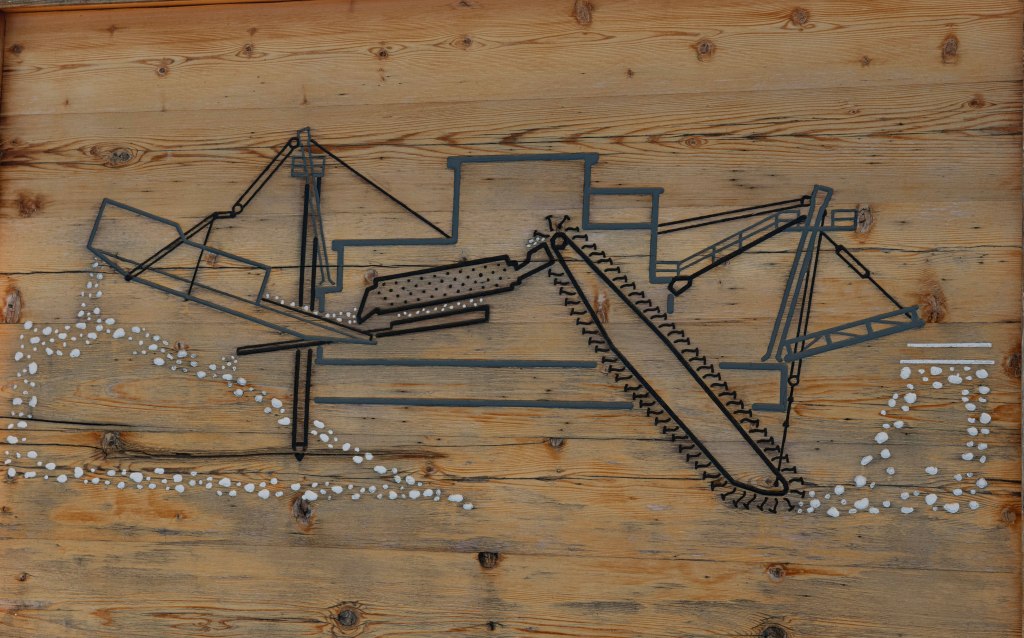
Dredge #4 digs the material from the front and deposits tailings in the rear moving forward maybe 10 feet each day. It digs out a wide swath to a depth of 57′.
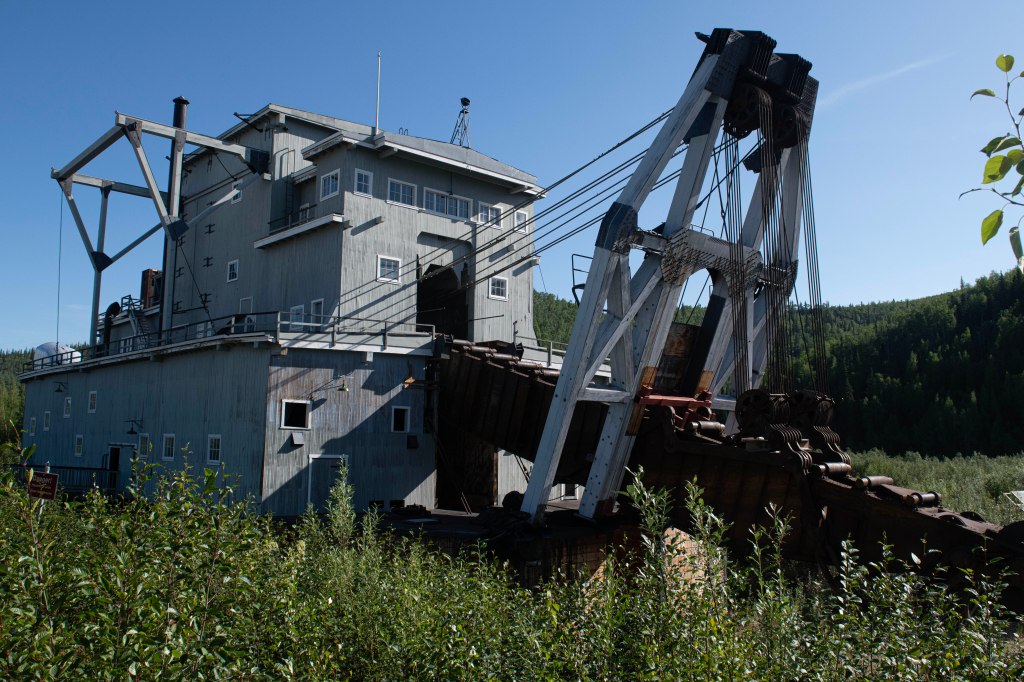
Dredge #4 at close to 200′ long it is the largest dredge of its type in North America. This type of dredge was first developed and used in New Zealand. Many of the components of this dredge were built in Maron, Ohio.
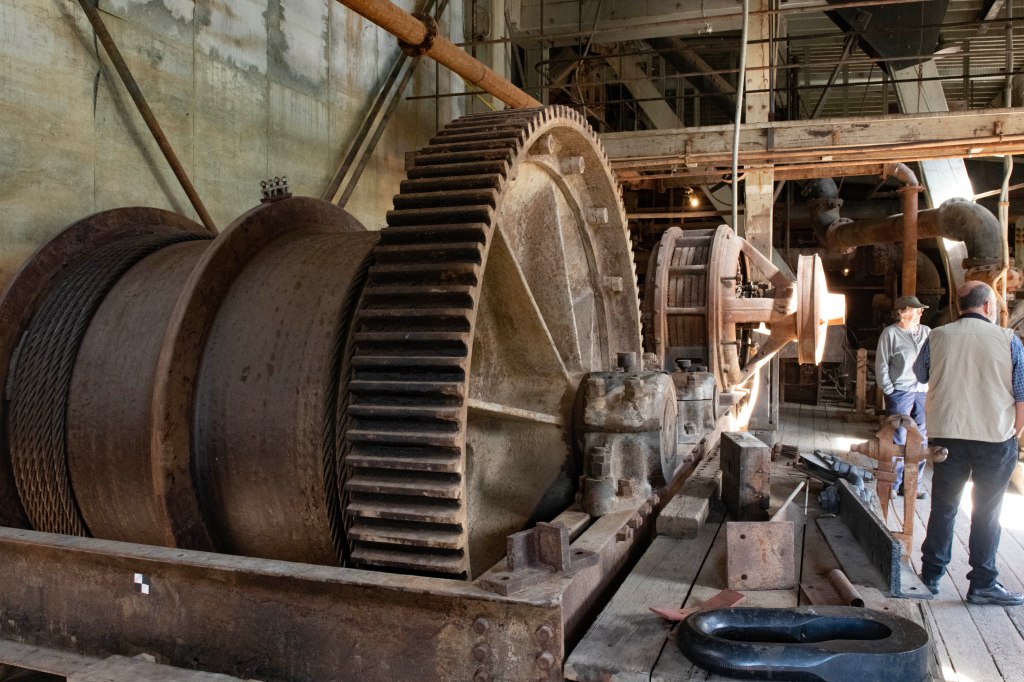
These large gears pulled cables designed to move the dredge forward and side to side.
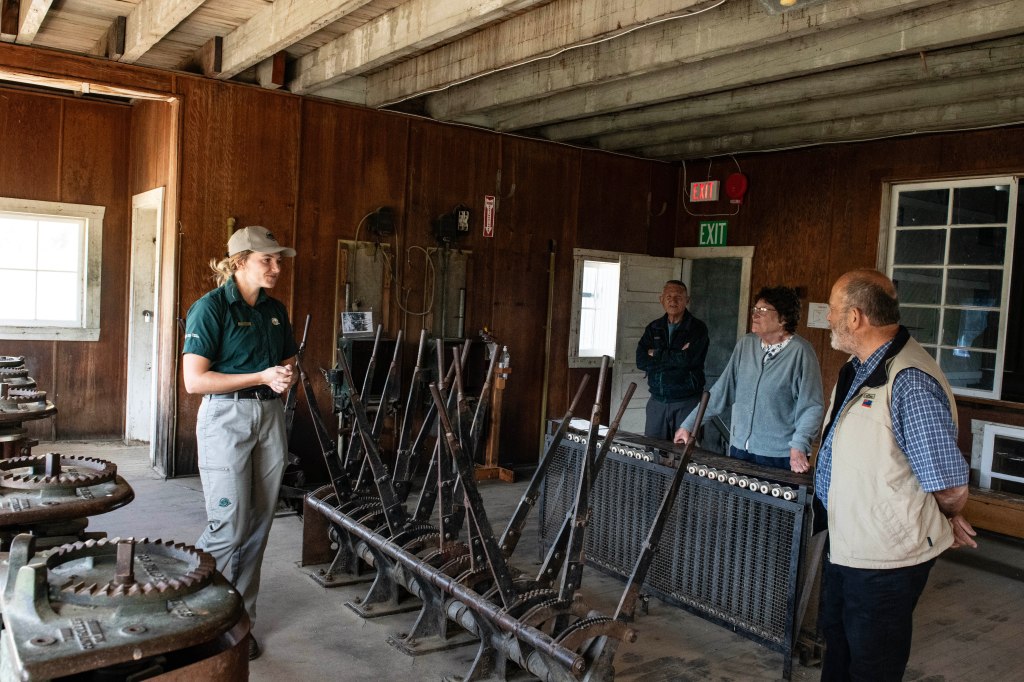
The control room for operating the dredge. The dredge was operated with four people onboard. The dredge was run by DC power. AC power was generated via hydro electric dams many miles away. The power went to a transformer to supply DC power to the dredge.
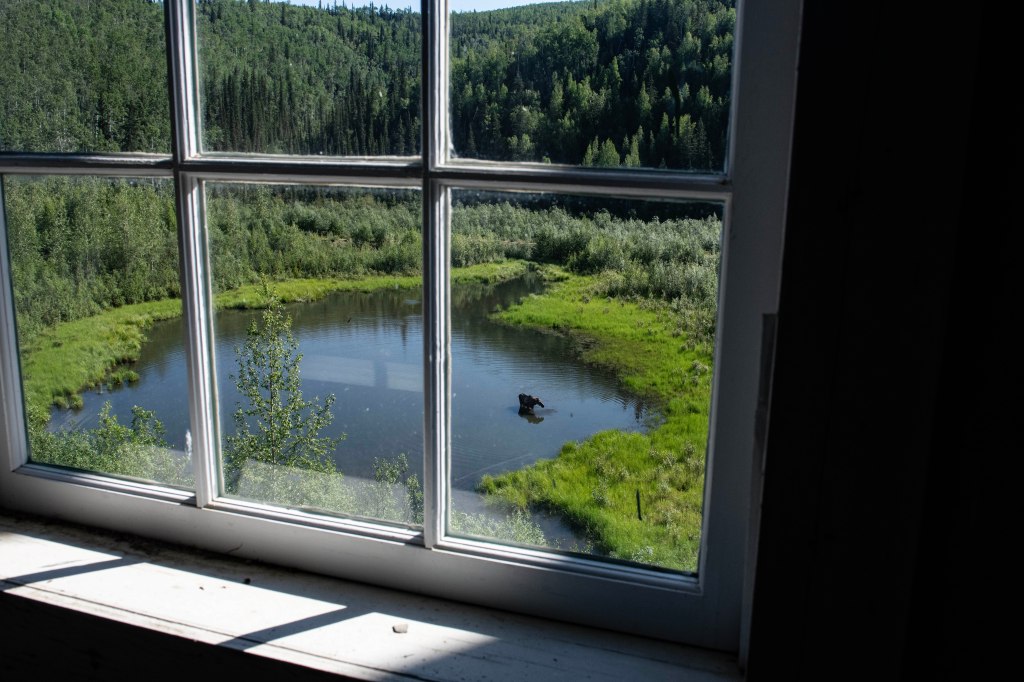
Looking out one of the upper floor windows of Dredge #4. Thars a Moose in thar pond!
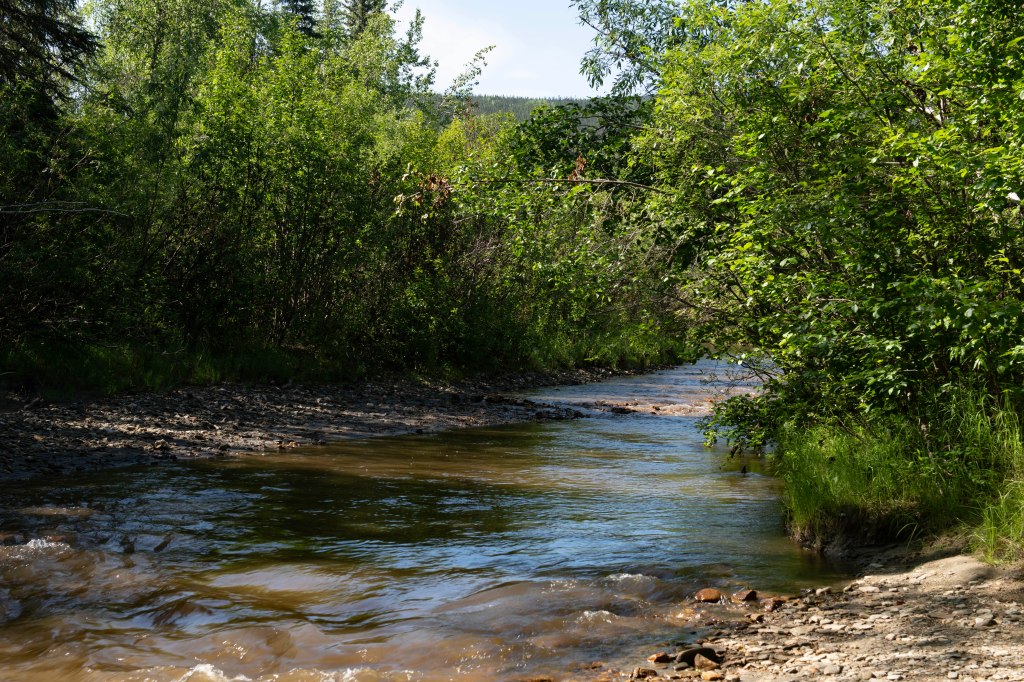
Here is the site of Discovery Claim along Bonanza Creek where the gold rush started.
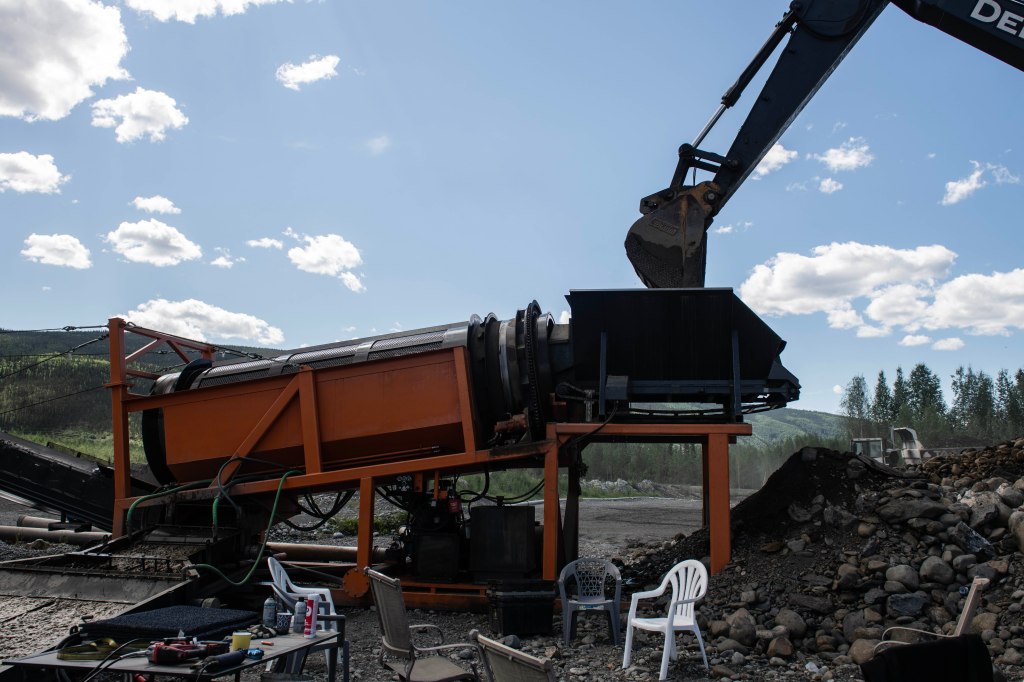
Here’s a currently mined family operation. The principles for extraction are just like Dredge #4.
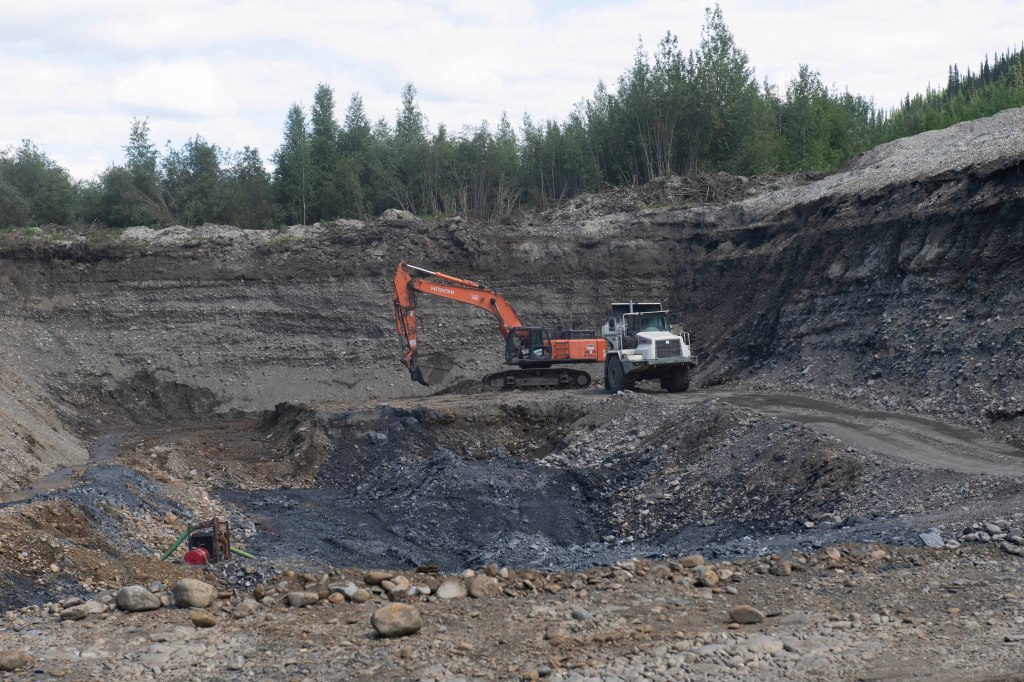
The pit where the material is first dug. The material from here is brought to the hopper extraction device in the next photo above.
 Seeing North America